★★★★★ Rated 4.8 out of 5 Stars

1 Year Warranty on All Plants

Get 10% Off with code FALL10

Everbearing Mulberry Tree

$9995 $23995
Height
Free Shipping - Your plants ship tomorrow
Plant Health Guaranteed
Free Lifetime Support
Risk-Free 1 Year Warranty
Use code "FALL10" for an extra 10% off!

Your Plants are Guaranteed to Grow

Your plants are guaranteed to arrive happy & healthy with our 1 Year Warranty. Your order will arrive healthy and stay healthy while they adapt to your climate. If your tree arrives damaged or dies within 30 days, we'll replace it for free. If it dies after 30 days, but before 1 year, we will replace it for just 50% of the current price.

Free Shipping on All Orders

Relax... we've got you covered with free shipping on every order! We ship out so many huge plants, we've negotiated a low rate with our carriers... and we pass those savings on to you! Your plants will ship out the next business day... expertly packed so that your plants will arrive happy and healthy!

Is Now a Good Time to Plant?

Yes! Fall is one of the best times to plant!

Landscaping experts often recommend planting in fall instead of waiting until spring. Here’s why:

  • Cooler weather puts less stress on newly planted trees and shrubs.
  • Fall soil is still warm, which helps roots grow and get established.
  • Cooler temperatures mean less water is lost through the leaves, making it easier for plants to stay hydrated.
  • Even after top growth slows for winter, roots continue developing below ground.
  • Fall weather often brings more rain and less heat, making new plants easier to care for.
  • By spring, your plants already have a head start. Their established roots can support strong new leaves, branches, and flowers.
  • Trees planted in spring must establish their roots while also dealing with rising temperatures and summer heat.

Plant this fall, and your trees can spend the cooler months getting settled instead of waiting until spring to get started!

Planting your Everbearing Mulberry Tree

Planting Instructions for Everbearing Mulberry Tree:

  1. Location & Soil Preparation: Everbearing mulberry trees thrive in full sun to partial shade, though they produce the most fruit with 6-8 hours of direct sunlight daily. They tolerate a wide range of soils, including sandy, loamy, or clay soils, but they do best in well-draining soil. Mulberries can also grow in slightly acidic to neutral soil (pH 5.5-7.0). If your soil is heavy clay or tends to retain water, amend it with compost or organic matter to improve drainage.
  2. Planting Depth & Spacing: Dig a hole twice as wide and the same depth as the root ball. Place the tree in the hole with the root ball slightly above ground level. This helps prevent water from pooling around the base. Backfill the hole with native soil, firming it gently around the roots to remove air pockets. Space multiple trees about 15-20 feet apart to allow enough room for spreading and airflow.
  3. Initial Watering: After planting, water the tree thoroughly to settle the soil around the roots. Apply a 2-3 inch layer of mulch around the base to retain moisture, regulate soil temperature, and prevent weed competition. Be sure to keep the mulch 2-3 inches away from the trunk to avoid rot.

Care Instructions:

  1. Watering: Mulberry trees are relatively drought-tolerant once established, but young trees need consistent moisture to help their roots grow deep. Water deeply once a week during the first year, especially during dry periods. Once established, water during prolonged droughts or dry spells. Always water at the base of the tree to avoid wetting the leaves, which can lead to fungal problems.
  2. Fertilization: Everbearing mulberries don’t require heavy feeding. Apply a balanced fertilizer (such as 10-10-10) in early spring before new growth begins. You can also use organic compost or well-rotted manure to boost soil fertility. Avoid over-fertilizing, as this can lead to excessive leaf growth with fewer fruits.
  3. Monitoring: Mulberries are generally pest-resistant but can occasionally face issues with pests such as aphids, whiteflies, or spider mites. Watch for signs of leaf curling, yellowing, or sticky residue, which can indicate pest problems. Treat with insecticidal soap or neem oil if needed.

Maintenance and Long-Term Care:

  1. Pruning: Prune your everbearing mulberry tree in late winter or early spring while the tree is still dormant. Focus on removing dead, damaged, or crossing branches to improve airflow and sunlight penetration through the canopy. Light pruning each year helps keep the tree manageable and improves fruit production. Avoid heavy pruning, as mulberries tend to "bleed" sap, which can stress the tree.
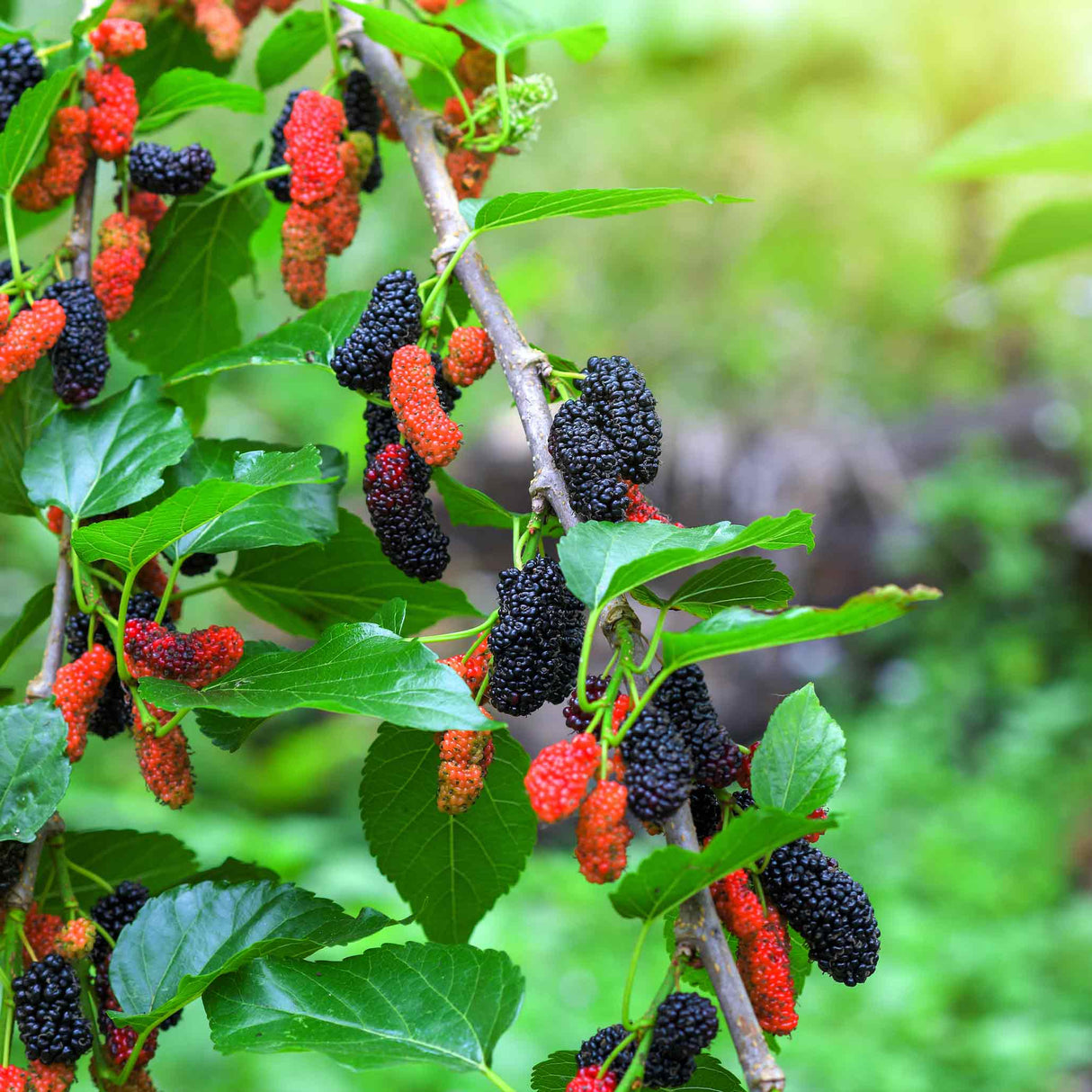
  2. Harvesting: Everbearing mulberries produce fruit over an extended period (usually late spring through summer), unlike some varieties that produce in one short window. The berries turn from red to deep purple-black when fully ripe. Harvest them by gently shaking the branches and collecting the berries on a tarp, or hand-pick them. Mulberries are best when picked fully ripe, as they do not ripen off the tree.
  3. Pest and Disease Control: Mulberries are largely pest- and disease-resistant. Occasionally, fungal diseases like powdery mildew or leaf spot can appear in humid or wet conditions. Ensure good air circulation through proper pruning, and water at the base to keep leaves dry. If necessary, apply a fungicide early in the season to prevent disease. Birds may feast on ripe mulberries, so consider netting the tree if you want to protect your harvest.
  4. Mulching and Weed Control: Continue to mulch around the tree to suppress weeds and retain moisture, especially during dry spells. Mulching also helps keep the root system cool in hot weather and insulates it in the winter.
  5. Cold Protection: Everbearing mulberry trees are hardy in USDA zones 5-9. In colder regions (zone 5), young trees may benefit from a layer of mulch around the base to protect the roots during harsh winters. You can wrap the tree in burlap to protect it from frost damage, particularly in areas with severe winters.

Growing Everbearing Mulberries in Containers:

If space is limited or you want to grow mulberries on a smaller scale, you can grow an everbearing mulberry tree in a container. Here’s how:

  1. Choosing a Container: Use a large container, at least 18-24 inches wide and deep, with drainage holes. Mulberry trees have a deep root system, so a sizable container is necessary to accommodate growth. Make sure the container is heavy or weighted, as mulberries can become top-heavy as they grow.
  2. Potting Mix: Use a well-draining potting mix, such as a blend designed for trees and shrubs, with added perlite or sand to improve drainage. Mulberries don’t like sitting in water, so avoid heavy, moisture-retaining soil.
  3. Watering and Fertilization: Container-grown mulberries dry out faster than those in the ground, so check the soil regularly and water when the top inch feels dry. Ensure that excess water drains out of the pot. Fertilize the tree every 4-6 weeks during the growing season with a balanced liquid fertilizer.
  4. Repotting: Repot your mulberry tree every 2-3 years into a slightly larger container to accommodate root growth. Refresh the potting mix each time you repot to provide fresh nutrients.
  5. Winter Care for Containers: In colder climates, move the container to a sheltered spot or indoors before winter, as the roots in containers are more susceptible to freezing. You can also wrap the pot with insulating material like burlap to protect it from extreme cold.

Additional Tips for Everbearing Mulberry Trees:

1. Boosting Fruit Production:

  • Watering and Fertilization: While mulberry trees are relatively low-maintenance, ensuring proper water and nutrients, especially during the growing season, can maximize fruit production. During dry periods, increase the frequency of watering, especially while the tree is fruiting. Fertilize with a high-potassium feed (e.g., 5-10-10) in early spring to promote better flowering and fruiting.
  • Proper Pruning: Prune lightly each year to encourage better fruit production. Removing crossing or damaged branches improves sunlight exposure and air circulation, leading to healthier growth and more fruit.

2. Protecting Mulberries from Pests:

  • Aphids and Scale: Regularly check the underside of leaves for aphids or scale insects. If spotted, a strong jet of water or an application of insecticidal soap or neem oil can be effective.
  • Birds and Wildlife: Birds, squirrels, and other wildlife are naturally attracted to ripe mulberries. Bird netting or reflective deterrents can help protect your harvest. Another option is to plant companion crops that birds prefer, like sunflowers or other berry plants, to divert their attention.

3. Maximizing Mulberry Health:

  • Soil Mulching and Improvement: Mulch is critical in retaining soil moisture, especially in hot climates. Apply a fresh layer of organic mulch (such as straw, wood chips, or shredded leaves) every spring. Mulch also helps regulate soil temperature and suppress weed growth.
  • Compost Tea: Applying compost tea (a liquid organic fertilizer made by steeping compost in water) once or twice a year helps provide a nutrient boost, especially to trees that might not need heavy fertilizing.

4. Managing Mulberry Size:

  • Growth Control: Everbearing mulberries can grow quickly, but you can easily keep them manageable with regular pruning. Prune your tree annually to shape it to your desired height and width. This not only keeps the tree from becoming too large but also helps maintain a more productive and accessible tree for fruit picking.
  • Dwarf Varieties: Consider growing a dwarf mulberry variety if you have limited space or are growing in containers. Dwarf varieties still produce delicious fruit but stay smaller and are more manageable in size.

5. Dealing with Fruit Drop:

  • Why It Happens: Mulberries sometimes drop unripe fruit due to environmental stress, poor pollination, or irregular watering. Avoid sudden changes in watering schedules to help minimize fruit drop. Deep, consistent watering is key, especially during dry spells.
  • Thinning: If your tree sets an excessively large crop, thinning out some of the young fruit can reduce strain on the branches and prevent fruit drop later. It also helps the remaining fruit grow larger and sweeter.

6. Preserving Your Harvest:

  • Freezing: Mulberries freeze well and can be preserved for later use. Simply wash and dry the berries, then spread them on a baking sheet and freeze until solid. After freezing, transfer them to freezer bags for long-term storage.
  • Drying: Mulberries can also be dried for snacks. Use a food dehydrator or oven at a low temperature (around 135°F) for several hours until they are fully dried. Store dried mulberries in an airtight container for use in cereals, granola, or as a snack.
  • Making Jams and Syrups: Mulberries make excellent jams, jellies, and syrups. To make jam, combine equal parts mulberries and sugar, and cook until thickened. For syrup, cook mulberries with sugar and water, then strain for a delicious topping for pancakes, waffles, or ice cream.

7. Companion Planting for Mulberries:

  • Beneficial Plants: Companion plants like clover or comfrey can help fix nitrogen in the soil, improving fertility and supporting mulberry growth. Additionally, planting marigolds or nasturtiums nearby can attract beneficial insects and deter pests like aphids.
  • Shading and Wind Protection: If you're in a very hot climate, companion planting tall plants or shrubs near your mulberry tree can provide light shade during the hottest part of the day. Likewise, in windy areas, planting a windbreak can help prevent damage to the tree and its fruit.

8. Long-Term Planning:

  • Fruit Timeline: Everbearing mulberries begin fruiting within 2-4 years, depending on the size of the tree when planted. However, their long lifespan means that with good care, they will produce fruit for decades, making them a valuable long-term investment for your garden.
  • Tree Longevity: Mulberry trees can live and produce fruit for over 50 years with the right care. As the tree matures, reduce fertilization slightly to avoid excessive growth. Pruning becomes more about maintenance and keeping the canopy open as the tree grows older.

9. Winter Care:

  • Cold Protection: Although hardy in USDA zones 5-9, mulberries may experience branch dieback in particularly harsh winters. In colder regions, wrap the trunk in burlap or use a tree guard for extra protection during winter months, especially for young trees. Additionally, adding a thicker layer of mulch around the base can insulate the roots from extreme cold.
  • Early Spring Growth: In late winter, inspect the tree for any damaged or dead branches from winter weather, and prune these out before the growing season begins. This will help the tree direct its energy into healthy, new growth.

10. Preventing Mess and Stains:

  • Strategic Placement: Since mulberries can stain driveways, walkways, or patios, it’s wise to plant your tree away from these areas. If you prefer to collect fallen fruit rather than hand-picking, place a tarp or ground cover beneath the tree to easily gather fallen berries and avoid staining.
  • Clean-Up: If you do experience staining from fallen mulberries, a quick clean-up using water and a scrub brush can remove the juice before it sets. Mulberry juice can stain fabric, so it's a good idea to wear gloves and old clothes when harvesting.

11. Pruning for Wildlife & Wildlife Management:

  • Wildlife Shelter: Mulberry trees not only provide fruit but also offer shelter and food for a variety of wildlife, including birds and beneficial insects. If you enjoy having wildlife in your garden, allow some of the fruit to remain on the tree for the animals.
  • Tree Netting: However, if you prefer to protect your entire harvest, consider using tree netting or bird deterrents (like reflective tape or noise-makers) during the fruiting season.
What Customers say about the Everbearing Mulberry Tree:

The Everbearing Mulberry Tree thrives in Zones 4-10
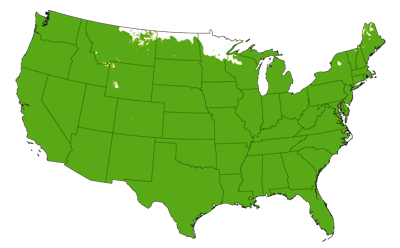
Growing Zones for the Everbearing Mulberry Tree

If you live in the green area above, we recommend the Everbearing Mulberry Tree.

Your Growing Zone
Recommended Zones 4-10
Mature Height 15 ft.
Mature Width 6-8 ft.
Cannot Ship To AZ, OR
Sunlight Full to Partial Sun
Botanical Name Morus alba 'Everbearing'

Plants that Make a Difference

For 20+ years, our team has shipped healthy, established plants to gardeners like you- all across the country. Every plant is selected and cared for by our plant experts before it ships to your door.

  • 20+ Years Experience

  • Superior Quality

  • Free Shipping on All Orders

  • Guaranteed to Grow

Beware- not all Everbearing Mulberry Trees are the same.

Be sure to get superior fruit trees, grown by experts.

Better Roots Make Stronger Plants: Some nurseries send you "bare root" fruit trees to save on shipping. Even worse, others have started digging them right out of the ground before shipping. This causes major transplant shock and long-term damage. We send you Everbearing Mulberry Trees in soil-filled containers- ensuring a well-developed root system that is ready to grow and produce!

Healthy Plants: We've seen other nurseries grow tall fruit trees in tiny pots to save on shipping. This leads to a "root bound" tree, where the roots have outgrown their pot- they cannot absorb water and nutrients. They quickly dry out during shipment, leading to an unhealthy tree.

The Everbearing Mulberry gives you weeks of sweet, juicy berries instead of one short harvest- from a fast-growing, easy tree.

  • Long harvest from late spring through summer, sometimes into early fall
  • Self-fertile- a single tree produces a generous crop
  • Fast-growing shade tree about 15 ft. tall and 6-8 ft. wide, easy to keep smaller with pruning
  • Handles cold winters and hot summers in zones 4-10

Not all plants are created equal

The Difference Is in the Roots

Every plant we ship has grown in a nursery container with its roots protected, so it arrives healthy, established and ready to thrive in your yard.

A full, branched Nationwide Plants tree in a nursery pot next to a thin bare-root tree with exposed roots Ours: container grown Theirs: bare root
Nationwide Plants compared with Other Nurseries
Nationwide Plants Other Nurseries
How it's grown Nationwide Plants: Grown in a nursery container, roots protected the whole time Other Nurseries: Pulled or dug from the field, tearing fragile roots
How it arrives Nationwide Plants: Arrives in its pot with soil intact Other Nurseries: Arrives bare root, exposed and drying out
Before shipping Nationwide Plants: Growing naturally until it ships Other Nurseries: Held dormant in a cooler, then shocked by a hot shipping box
Root health Nationwide Plants: Strong, well-developed roots with room to grow Other Nurseries: Crammed into a small pot until it's root bound
Height Nationwide Plants: Measured from the top of the soil Other Nurseries: Often includes the pot and roots
After planting Nationwide Plants: Settles in quickly with less transplant shock Other Nurseries: Arrives stressed and can take years to recover, if it does

The height you see is the height you plant.

We measure every plant from the top of the soil, not the bottom of the pot. Many nurseries include the pot and roots, so a "5–6 ft." tree from them might stand only 4 ft. tall once it's planted.

Comparisons reflect common practices across the online plant industry, not any single company.

Honest Measurements: Some nurseries measure trees including the pot and roots, so their "5-6 ft." tree may only be about half that size when planted. We measure all of our plants from the soil line, so the height you see is what you can expect after planting.

From our nursery to your door

How We Ship Your Plants

Every order is hand-selected, watered and carefully packed so it arrives healthy and ready to plant. Here's what happens after you place your order.

  1. Step 1: Hand-Picked for You

    Our team selects the best plant available for your order. For privacy trees, that's the tallest and fullest. For fruit trees, it's the best branched.

    Why it matters: Many online nurseries ship whatever is next in the row.

  2. Step 2: A Deep Drink Before the Trip

    Every plant gets a thorough watering right before it's packed, so it starts the journey fully hydrated.

  3. Step 3: Roots Sealed In

    We wrap the pot and roots in plastic to lock in moisture, so your plant has water to drink all the way to your door.

    Why it matters: Bare-root plants are often shipped with their roots exposed and drying out.

  4. Step 4: Braced for the Ride

    Cardboard inserts are secured inside every box to hold your plant in place, so it won't slide, tip or get damaged in transit.

  5. Step 5: Shipped Only by FedEx

    We ship your trees exclusively with FedEx. We've found they deliver the fastest and handle live plants the most gently.

And if anything goes wrong, every plant is backed by our 1 Year Warranty.

Healthy Roots Make a Huge Difference

  • Never buy bare-root plants. These trees are starved of nutrients, and have a low survival rate.
  • Beware of nurseries cut corners by growing in small pots. These "rootbound" plants are weak, struggle to absorb nutrients, and die quickly after planting.
  • Some nurseries try to sell oversized plants, but chop off vital roots so they can cram the rootball into a narrow box to save on shipping!

You Want Everbearing Mulberry Trees Grown by Experts

Some nurseries ship thin, underdeveloped fruit trees grown in tiny pots to save money. These weak, "root bound" trees can spend years recovering before they give you a real harvest.

Nationwide Plants only sends you strong Everbearing Mulberry Trees, selected and cared for by our plant experts, with healthy, developed roots. A strong start helps your tree settle in quickly and begin bearing fruit, often around 2-4 years after planting.

Read more about the Everbearing Mulberry Tree

Everbearing Mulberry Tree – A Hardy, Fast-Growing Tree with Delicious, Nutrient-Rich Fruit

The Everbearing Mulberry Tree (Morus alba 'Everbearing') is a highly productive and fast-growing fruit tree that provides a bountiful harvest of sweet, juicy mulberries throughout the summer. Known for its long fruiting season and low-maintenance care, this hardy tree is perfect for home gardeners looking for a reliable, nutritious fruit source. In addition to producing delicious berries, the Everbearing Mulberry Tree also provides shade with its large, lush green leaves, making it a practical and attractive addition to any landscape.

Key Features of the Everbearing Mulberry Tree:

  • Long Fruit Harvest: Produces sweet, juicy, black mulberries continuously from early summer through late summer or even early fall.
  • Fast-Growing & Productive: Grows quickly, reaching heights of 10-15 feet, with abundant fruit yields that get better year after year.
  • Easy to Grow & Maintain: Thrives in USDA Zones 4-10, tolerating a wide range of climates and soil conditions with minimal care.
  • High in Nutrients: Mulberries are rich in vitamins, antioxidants, and fiber, making them a healthy, delicious snack or ingredient for jams, smoothies, and desserts.
  • Attractive Shade Tree: Its broad canopy of large green leaves makes it a perfect shade tree for backyards, patios, or garden areas.

A Bountiful Harvest of Sweet, Juicy Mulberries

The Everbearing Mulberry Tree is famous for its long fruiting season, providing a steady supply of mulberries from early summer through late summer. These plump, black mulberries are bursting with sweet, tangy flavor and are perfect for fresh eating, making pies, jams, smoothies, or even drying for later use. With its continuous production of berries, this tree ensures you’ll have plenty of fresh fruit to enjoy all summer long.

Fast-Growing & Perfect for Small Yards

This variety of mulberry is fast-growing, reaching a manageable height of 10-15 feet, making it ideal for smaller yards or urban spaces. Its compact size allows it to fit easily into a variety of garden settings, while still providing an impressive yield of fruit. The tree’s naturally spreading canopy offers plenty of shade, making it a practical choice for homeowners looking for both beauty and function in their landscape.

Easy to Grow & Low Maintenance

The Everbearing Mulberry Tree is incredibly easy to care for, making it perfect for both novice and experienced gardeners. It thrives in full sun but can also tolerate partial shade, and it adapts well to a variety of soil types, including clay, loam, and sandy soils. Once established, it’s drought-tolerant and requires little water, making it a great choice for low-maintenance gardening. This hardy tree is resistant to pests and diseases, ensuring years of reliable fruit production with minimal care.

Nutrient-Rich and Versatile Fruit

Mulberries are not only delicious, but they’re also packed with nutrients. They’re rich in vitamins C and K, as well as antioxidants and dietary fiber, making them a healthy snack that supports immune health, digestion, and overall wellness. The fruit can be enjoyed fresh or used in a wide variety of recipes, including jams, pies, wines, and even smoothies. With the Everbearing Mulberry Tree, you’ll have a steady supply of nutrient-rich fruit for your family to enjoy.

Ideal for a Wide Range of Climates

The Everbearing Mulberry Tree is highly adaptable to different climates, thriving in USDA Zones 4-10. Whether you live in a cold northern region or a warm southern area, this tree will perform beautifully. Its hardiness allows it to tolerate both hot summers and cold winters, making it an excellent choice for gardeners in diverse growing regions. The tree grows quickly, reaching maturity within just a few years and rewarding you with fruit and shade early in its life.

Why Choose Nationwide Plants?

At Nationwide Plants, we’re committed to offering the highest quality trees and shrubs for your garden. Our Everbearing Mulberry Trees are hand-selected for their health and productivity, ensuring that they arrive at your home ready to thrive. With fast, reliable shipping and exceptional customer service, we make it easy to bring this productive and low-maintenance tree to your landscape.

Start Growing Delicious, Healthy Mulberries – Order Your Everbearing Mulberry Tree Today!

Enjoy sweet, nutrient-packed mulberries all summer long with the easy-to-grow Everbearing Mulberry Tree. Perfect for small yards, patios, or larger orchards, this fast-growing, low-maintenance tree will reward you with abundant fruit and shade year after year. Order today from Nationwide Plants and enjoy fast delivery of this productive tree right to your door!

Frequently Asked Questions about the Everbearing Mulberry Tree

When does the Everbearing Mulberry Tree produce fruit?

The Everbearing Mulberry Tree produces fruit over a long season, from late spring through summer and sometimes into early fall. Instead of one short harvest, berries ripen a few at a time for weeks. They turn from red to deep purple-black when fully ripe, and they do not ripen further after picking.

How big does an Everbearing Mulberry Tree get?

An Everbearing Mulberry Tree typically grows about 15 feet tall and 6 to 8 feet wide. It is fast growing, but annual pruning makes it easy to keep smaller for convenient picking. Its broad, leafy canopy also provides welcome shade in the backyard.

How long until an Everbearing Mulberry Tree bears fruit?

An Everbearing Mulberry Tree usually begins fruiting within 2 to 4 years, depending on the size of the tree when planted. Once it starts, harvests improve year after year, and with good care a mulberry can keep producing for decades.

Do you need two mulberry trees to get fruit?

No, you only need one Everbearing Mulberry Tree to get fruit. This variety is self-fertile, so a single tree will produce a generous crop on its own. That makes it a great choice for small yards where there is room for only one fruit tree.

What zones does Everbearing Mulberry grow in?

Everbearing Mulberry grows in USDA Hardiness Zones 4 through 10, handling both cold winters and hot summers. In the colder part of its range, protect young trees with a thick layer of mulch and wrap the trunk in burlap during harsh winters to prevent frost damage and branch dieback.

Do mulberry trees stain driveways and patios?

Yes, ripe mulberries can stain driveways, walkways, patios, and clothing when they fall. Plant your Everbearing Mulberry away from paved areas and parking spots. Spreading a tarp under the tree at harvest time makes it easy to collect fallen berries and keeps cleanup simple.

How far apart should I plant mulberry trees?

Space Everbearing Mulberry Trees about 15 to 20 feet apart to allow room for their spreading canopies and good airflow. Plant the root ball slightly above ground level in well-draining soil, water thoroughly, and apply 2 to 3 inches of mulch kept a few inches away from the trunk.

Can an Everbearing Mulberry be grown in a container?

Yes, an Everbearing Mulberry can be grown in a large container at least 18 to 24 inches wide and deep with drainage holes. Use a heavy or weighted pot, since the tree can become top-heavy. Water when the top inch of soil is dry, and repot every 2 to 3 years.

When should I prune an Everbearing Mulberry Tree?

Prune an Everbearing Mulberry Tree in late winter or early spring while it is dormant. Remove dead, damaged, or crossing branches and lightly shape the canopy to control size and improve sunlight for fruit. Avoid heavy pruning, since mulberries tend to bleed sap, which can stress the tree.

How do I keep birds from eating my mulberries?

To keep birds from eating your mulberries, cover the tree with bird netting a few weeks before the fruit ripens, or hang reflective tape as a deterrent. Some gardeners plant sunflowers or other berry plants nearby as a decoy. Picking ripe berries every day or two also reduces losses.