


Blue Chip Juniper
Your Plants are Guaranteed to Grow
Your Plants are Guaranteed to Grow
Your plants are guaranteed to arrive happy & healthy with our 1 Year Warranty. Your order will arrive healthy and stay healthy while they adapt to your climate. If your tree arrives damaged or dies within 30 days, we'll replace it for free. If it dies after 30 days, but before 1 year, we will replace it for just 50% of the current price.
Free Shipping on All Orders
Free Shipping on All Orders
Relax... we've got you covered with free shipping on every order! We ship out so many huge plants, we've negotiated a low rate with our carriers... and we pass those savings on to you! Your plants will ship out the next business day... expertly packed so that your plants will arrive happy and healthy!
Is Now a Good Time to Plant?
Is Now a Good Time to Plant?
Yes! Fall is one of the best times to plant!
Landscaping experts often recommend planting in fall instead of waiting until spring. Here’s why:
- Cooler weather puts less stress on newly planted trees and shrubs.
- Fall soil is still warm, which helps roots grow and get established.
- Cooler temperatures mean less water is lost through the leaves, making it easier for plants to stay hydrated.
- Even after top growth slows for winter, roots continue developing below ground.
- Fall weather often brings more rain and less heat, making new plants easier to care for.
- By spring, your plants already have a head start. Their established roots can support strong new leaves, branches, and flowers.
- Trees planted in spring must establish their roots while also dealing with rising temperatures and summer heat.
Plant this fall, and your trees can spend the cooler months getting settled instead of waiting until spring to get started!
Planting your Blue Chip Juniper
Planting your Blue Chip Juniper
How We Ship Your Plants
From our nursery to your doorstep
Ordering live plants online should feel exciting, not stressful. We only ship healthy, well-rooted trees and plants, packed to arrive ready to thrive.
We never cut corners on roots
Some nurseries cut corners to save on shipping. A strong root system is the foundation for long-term success, so your plant should arrive ready to thrive, not struggling to recover from shortcuts.
We never
- Ship bare-root plants
- Cut roots to fit a plant into a small box
We always
- Ship plants with healthy, developed roots, so they establish faster at your home
- Put plant health first, not minimizing shipping costs
Watch: what to expect from your delivery
Your plant's journey
Once you place your order, our nursery team selects your plant and inspects it to make sure it meets our quality standards. We try our best to exceed your expectations!
Strong health
Vibrant foliage and no signs of stress.
Developed roots
A well-developed root system that's ready for your yard.
Correct size
Sized to match exactly what you ordered.
- SelectedHand-picked and inspected by our nursery team
- WateredA good drink right before the trip
- WrappedRoots sealed in a plastic bag so they don't dry out
- PackedSecured in a strong box built for live plants
- ShippedHanded to FedEx, with tracking emailed to you
Packed & protected
Live plants can't be packed like ordinary boxes, so we do it differently. Your plant is secured inside a strong shipping box to protect it while traveling.
Support for stability
Support materials keep your plant upright and steady.
Pot & root protection
Extra protection around the pot and roots.
Reinforced boxes
Larger trees ship in oversize boxes built for their size and structure.
Several plants in one box? That's on purpose. It spreads the weight evenly, which keeps your plants safe and secure throughout delivery.
Shipped with FedEx
- Ships Monday–Friday
- Most orders ship the next business day
- Tracking emailed when it ships
Over the years, we've found FedEx to be the best carrier for live plants, especially larger items. Want a different date? You can request a custom ship date.
Quickest delivery
FedEx delivers quickest across the country.
Gentle handling
They're the most gentle with live plants.
Less plant stress
Faster transit means less time in the box.
Nurseries on both coasts
We ship from multiple locations across the country, including both the East Coast and West Coast. This lets us:
- Deliver faster in more regions
- Reduce time in transit for your plants
- Ship large items more efficiently

How we measure your trees
When you order a 5–6 ft. tree, you get a tree that's 5–6 ft. tall above the soil, not "including the container." You'll know what to expect when it arrives, and what it will look like in the ground.

More detail: tree sizes · shrub sizes · houseplant sizes
When your plants arrive
It's completely normal for a plant to look slightly different after shipping. In most cases it perks up quickly once it's unboxed, watered if needed, and placed in the right spot.
Normal after shipping
- Minor leaf drop
- Soil that shifted slightly in the pot
- Temporary drooping from being in a dark box
Unbox in 4 steps
-
Open carefully
Avoid cutting into foliage.
-
Remove all packing
Including the bag around the roots.
-
Check soil moisture
If it feels dry, water thoroughly.
-
Let it recover
Give it fresh air after the trip.
Covered by our 1 Year Warranty
Every plant we ship is covered for 365 days from your delivery date.
If your plant arrives damaged, or fails to thrive within 30 days of delivery, we'll send a replacement at no cost to you.
If your plant doesn't survive between days 31 and 365, we'll replace it for 50% of the current retail price.
One replacement per plant. If anything doesn't look right, contact us and we'll help you troubleshoot quickly. How to file a claim · Full warranty terms
Frequently asked questions
Do you ship bare-root plants?
No. We ship in soil with an established root system for the best success after delivery.
How fast will my order ship?
Most orders ship the next business day, Monday through Friday, unless you request a custom ship date.
Will my plant survive shipping?
Yes. Plants are resilient when packed correctly and shipped quickly. Our process is designed to protect your plant throughout transit.
What if my plant arrives droopy?
This is usually temporary from being in a dark box. Unbox promptly, check moisture, and allow time to adjust. If you're concerned, reach out. We're here to help.
What if my plant arrives damaged?
Take a photo and contact us with your order number. Damage on arrival is covered by a free replacement under our 1 Year Warranty.
Questions? We're happy to help.
Whether it's about your delivery or planting your new trees, a real person on our team will help.
Want Bigger Plants?
The Blue Chip Juniper thrives in Zones 3-9
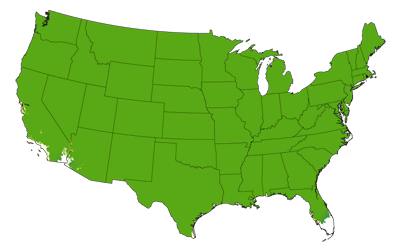
If you live in the green area above, we recommend the Blue Chip Juniper.
| Your Growing Zone | |
| Recommended Zones | 3-9 |
| Mature Height | 6-12 inches |
| Mature Width | 6-8 ft. |
| Cannot Ship To | CA |
| Sunlight | Full to Partial Sun |
| Botanical Name | Juniperus horizontalis 'Blue Chip' |
Plants that Make a Difference
For 20+ years, our team has shipped healthy, established plants to gardeners like you- all across the country. Every plant is selected and cared for by our plant experts before it ships to your door.
20+ Years Experience
Superior Quality
Free Shipping on All Orders
Guaranteed to Grow
Beware- not all Blue Chip Junipers are the same.
Not all plants are created equal
The Difference Is in the Roots
Every plant we ship has grown in a nursery container with its roots protected, so it arrives healthy, established and ready to thrive in your yard.
 Ours: container grown
Theirs: bare root
Ours: container grown
Theirs: bare root| Nationwide Plants | Other Nurseries | |
|---|---|---|
| How it's grown | Nationwide Plants: Grown in a nursery container, roots protected the whole time | Other Nurseries: Pulled or dug from the field, tearing fragile roots |
| How it arrives | Nationwide Plants: Arrives in its pot with soil intact | Other Nurseries: Arrives bare root, exposed and drying out |
| Before shipping | Nationwide Plants: Growing naturally until it ships | Other Nurseries: Held dormant in a cooler, then shocked by a hot shipping box |
| Root health | Nationwide Plants: Strong, well-developed roots with room to grow | Other Nurseries: Crammed into a small pot until it's root bound |
| Height | Nationwide Plants: Measured from the top of the soil | Other Nurseries: Often includes the pot and roots |
| After planting | Nationwide Plants: Settles in quickly with less transplant shock | Other Nurseries: Arrives stressed and can take years to recover, if it does |
The height you see is the height you plant.
We measure every plant from the top of the soil, not the bottom of the pot. Many nurseries include the pot and roots, so a "5–6 ft." tree from them might stand only 4 ft. tall once it's planted.
Comparisons reflect common practices across the online plant industry, not any single company.
From our nursery to your door
How We Ship Your Plants
Every order is hand-selected, watered and carefully packed so it arrives healthy and ready to plant. Here's what happens after you place your order.
-
Step 1: Hand-Picked for You
Our team selects the best plant available for your order. For privacy trees, that's the tallest and fullest. For fruit trees, it's the best branched.
Why it matters: Many online nurseries ship whatever is next in the row.
-
Step 2: A Deep Drink Before the Trip
Every plant gets a thorough watering right before it's packed, so it starts the journey fully hydrated.
-
Step 3: Roots Sealed In
We wrap the pot and roots in plastic to lock in moisture, so your plant has water to drink all the way to your door.
Why it matters: Bare-root plants are often shipped with their roots exposed and drying out.
-
Step 4: Braced for the Ride
Cardboard inserts are secured inside every box to hold your plant in place, so it won't slide, tip or get damaged in transit.
-
Step 5: Shipped Only by FedEx
We ship your trees exclusively with FedEx. We've found they deliver the fastest and handle live plants the most gently.
And if anything goes wrong, every plant is backed by our 1 Year Warranty.

Healthy Roots Make a Huge Difference
- Never buy bare-root plants. These trees are starved of nutrients, and have a low survival rate.
- Beware of nurseries cut corners by growing in small pots. These "rootbound" plants are weak, struggle to absorb nutrients, and die quickly after planting.
- Some nurseries try to sell oversized plants, but chop off vital roots so they can cram the rootball into a narrow box to save on shipping!
You Want Blue Chip Junipers Grown by Experts
Frequently Asked Questions about the Blue Chip Juniper
How big does Blue Chip Juniper get?
Blue Chip Juniper stays very low at about 6 to 12 inches tall but spreads 6 to 8 feet wide. It forms a dense carpet of silver-blue foliage that covers open soil. This low, wide habit makes it ideal for slopes, rock gardens, retaining walls, and driveway edges.
How far apart do you plant Blue Chip Juniper for groundcover?
Plant Blue Chip Juniper about 4 to 6 feet apart for groundcover. With a mature spread of 6 to 8 feet, the plants will grow together into a continuous mat. Space them closer if you want faster coverage, and mulch between plants while they fill in.
What zones does Blue Chip Juniper grow in?
Blue Chip Juniper grows in USDA zones 3 through 9. Once established, it handles heat, cold, snow, frost, and dry weather with very little care. That wide range makes it a dependable evergreen groundcover for most of the country. Its blue foliage stays on the plant through every season.
Does Blue Chip Juniper need full sun?
Blue Chip Juniper grows in full to partial sun, but full sun gives the best growth and strongest silver-blue color. In partial shade, it may spread more slowly and look less dense. For the thickest carpet of blue foliage, choose a bright, open spot.
Is Blue Chip Juniper good for slopes?
Yes, Blue Chip Juniper is excellent for slopes and embankments. Its low, spreading branches cover exposed soil and help reduce soil movement during heavy rain. It is especially useful in places that are hard to mow or where erosion is a concern.
Does Blue Chip Juniper stay blue all year?
Yes, Blue Chip Juniper keeps its cool silver-blue foliage year-round, giving your yard a strong evergreen look even in winter. The blue tone contrasts well with green shrubs, purple foliage, ornamental grasses, stone, and gravel. In very cold weather the foliage may pick up slight purple tints before brightening again in spring.
Is Blue Chip Juniper deer resistant?
Yes, Blue Chip Juniper is deer resistant, and deer usually leave this tough evergreen alone. That makes it a useful groundcover for areas with browsing pressure. No plant is completely deer-proof, but junipers are rarely a favorite. Its prickly foliage makes it an unappealing snack for most wildlife.
What soil does Blue Chip Juniper grow in?
Blue Chip Juniper grows well in rocky, sandy, gravelly, or poor soil as long as the area drains well. Avoid soggy spots where water collects. Water regularly while it becomes established, then it becomes much more drought tolerant. Rich soil is not required, and heavy fertilizing is usually unnecessary.
Can Blue Chip Juniper trail over a wall?
Yes, Blue Chip Juniper naturally spreads outward and can trail over retaining walls, curbs, rocks, and raised beds. This relaxed, cascading growth softens hard edges. It can also spill over the sides of a large outdoor container for a flowing look.
Can Blue Chip Juniper ship to California?
No, Blue Chip Juniper cannot be shipped to California (CA) due to state plant regulations. California gardeners looking for a blue groundcover should choose a plant that is permitted in their state. Customers in every other state can order it as usual and plant it in their landscape.